


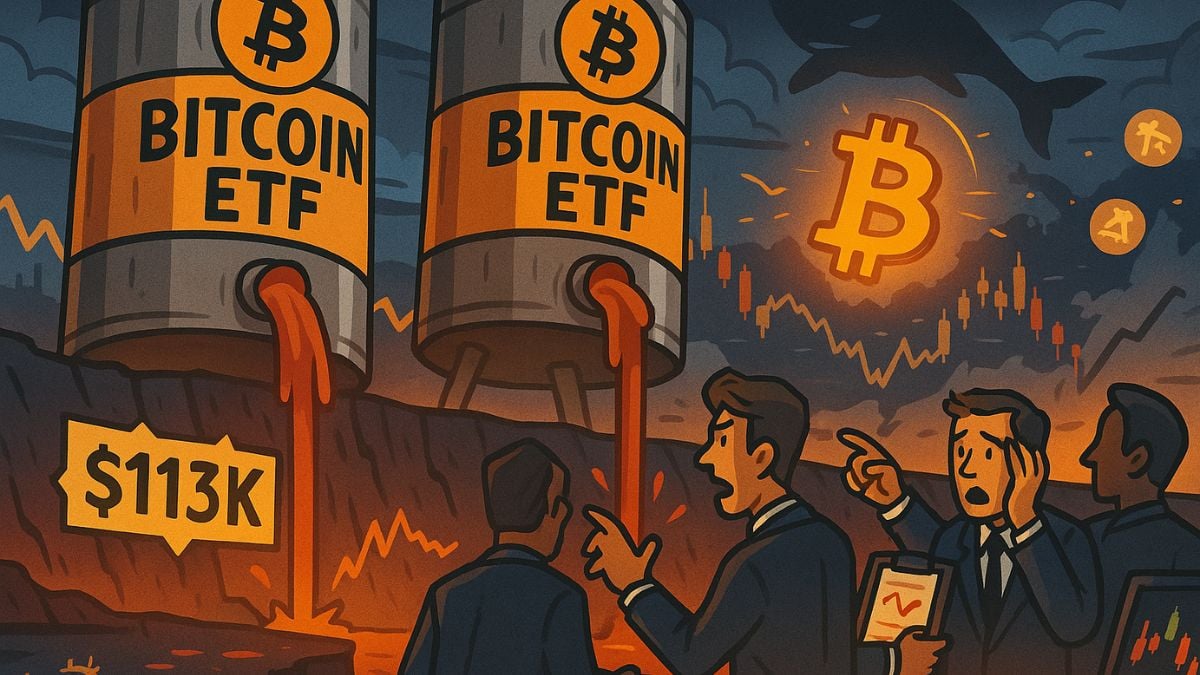
The crowd of investors who built their Bitcoin positions years before the asset became a household name have a reputation for holding through almost anything, which makes this week’s selling activity considerably more significant than the numbers alone would suggest.
Blockchain analytics firm Lookonchain identified at least two long-term holders who together offloaded more than 1,650 BTC, valued at over $117.87 million, on Thursday morning as Bitcoin fell below the $70,000 threshold for the first time since the Iran war initially sent the price upward in late February.


One of those sellers was a seasoned whale identified as Owen Gunden, who had already unloaded an 11,000 BTC stack in a previous move and chose this week to add a further 650 BTC, worth around $46 million, to Kraken, marking his first substantial sale in five months.
The second seller was an even older wallet, one that acquired a 5,000 BTC stack thirteen years ago and had held through multiple cycles of euphoria and collapse without blinking, exiting 1,000 BTC on Thursday worth roughly $71 million and making clear the macro calculus had shifted.
The immediate trigger was Wednesday’s Federal Reserve decision to leave rates unchanged at 3.50 to 3.75 percent, which was expected, combined with a dot plot revision showing the median FOMC member now projects only one rate cut for the entirety of 2026, a materially more hawkish signal than markets had priced going into the meeting.
Bitcoin had been trading above $74,000 with genuine momentum heading into the FOMC announcement, having posted eight consecutive daily gains in a run that generated a 14 percent recovery from its post-war lows, and the speed of the reversal was brutally efficient, with BTC dropping roughly 3.6 percent on the day of the announcement before extending losses Thursday.
Bitcoin spot ETFs in the United States recorded net outflows of $130 million on Wednesday, reversing $199 million of inflows from the day before, with Fidelity’s FBTC product alone accounting for $104 million of those withdrawals as institutional investors adjusted their positioning to the new rate environment.
The broader liquidation cascade that followed was substantial: more than $513 million in crypto positions were closed in the 24 hours following the announcement, with long positions accounting for $420 million of that figure and the majority of altcoins falling harder than Bitcoin itself, with Ethereum shedding nearly six percent and Solana falling toward the $87 level.
Matt Mena, crypto research strategist at 21Shares, framed the situation with considerable precision: “The higher for longer narrative has been reinvigorated by sticky inflation and the inflationary shadow cast by rising energy costs, forcing investors to abandon their dreams of a rapid easing cycle.”
The Iranian conflict adds a dimension to this picture that makes the Fed’s situation genuinely difficult to navigate: crude oil above $110 per barrel is mechanically inflationary, and the Fed’s updated PCE inflation forecast of 2.7 percent for 2026, up from 2.4 percent in December, reflects exactly that pressure being baked into official projections.
Bitget Wallet research analyst Lacie Zhang identified the risk ahead of the meeting with notable accuracy, noting that “a hawkish hold, where rates stay unchanged but the dot plot shifts from two cuts to one, potentially delayed beyond July, would likely be a mild near-term headwind for Bitcoin,” a description that proved more prescient than mild once the actual numbers came through.
The Fear and Greed Index for crypto markets settled at 23 on Thursday, deep in extreme fear territory and barely recovered from the reading of 18 recorded the previous week, a sustained period of negative sentiment that tends to either mark an accumulation opportunity for conviction buyers or the early stages of a more prolonged downturn depending entirely on whether the macro picture improves.
Bitcoin’s year-to-date performance now sits at negative 19.8 percent, with the asset trading approximately 44 percent below its all-time high of $126,198 recorded in October 2025, a gap that underlines just how much of the post-halving cycle’s gains have been retraced in a market that is simultaneously dealing with geopolitical shock, Fed hawkishness and early-adopter profit-taking happening in the same week.