


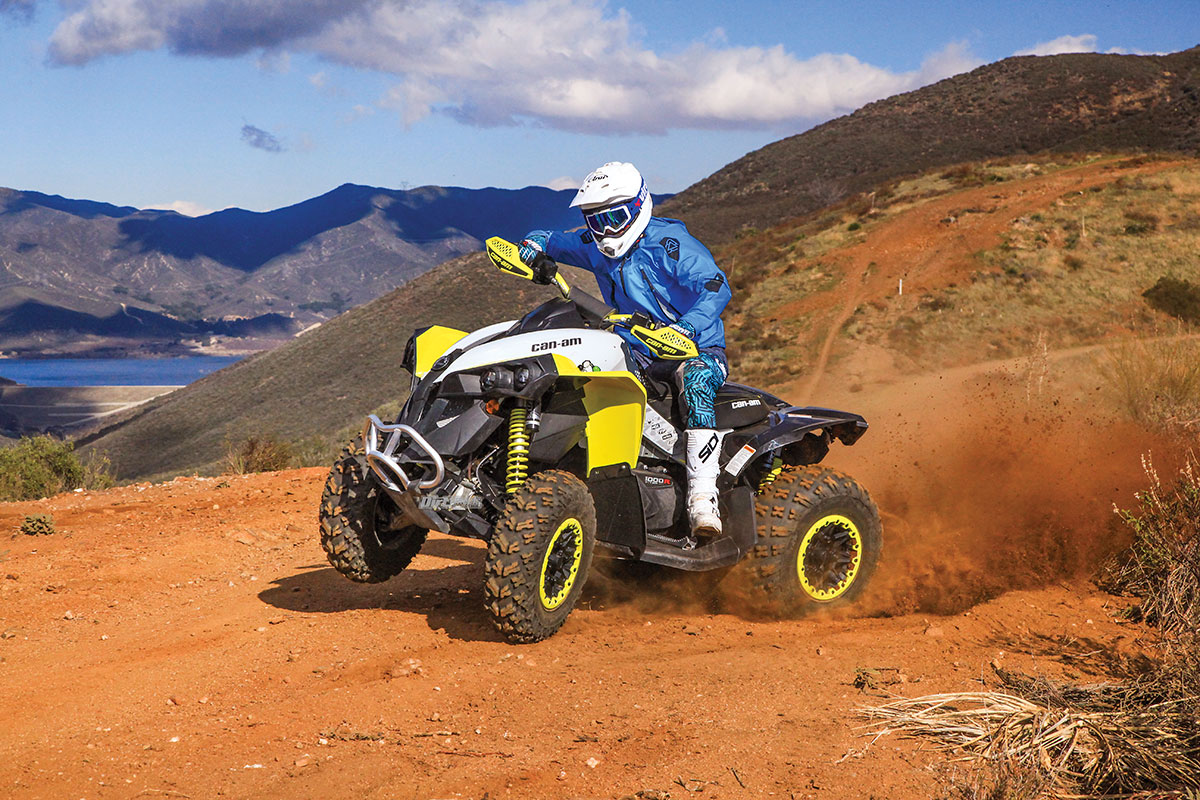
XXC 1000 v XXC 2018 are frequently compared, with potential buyers closely looking at their specs when deciding which is best for them.
The Can-Am Renegade X XC 1000 has long been positioned as one of the most aggressive sport-utility ATVs in the performance segment, blending race-ready suspension with a powerful V-twin platform.


When riders compare the current Renegade X XC 1000 to the 2018 Renegade X XC, the discussion usually centres on how much has genuinely changed and whether newer refinements justify stepping away from a proven earlier model year.
Adding the Renegade 1000 X MR into the comparison further highlights how Can-Am has deliberately segmented the Renegade lineup into highly specialised machines rather than a single do-it-all ATV.
Platform and Engine Continuity
Both the current Renegade X XC 1000 and the 2018 X XC are built around Can-Am’s 976cc liquid-cooled Rotax V-twin engine.
This powerplant has remained a cornerstone of the Renegade range due to its strong torque delivery, durability, and high-revving performance characteristics.
Output sits at approximately 91 horsepower, channelled through a CVT transmission with high and low range and standard engine braking.
In real-world riding, power delivery feels broadly similar between the two X XC generations, especially at higher speeds where the V-twin’s character is most evident.
Later model years benefit from subtle updates to throttle calibration and driveline smoothness, improving low-speed control without dulling the Renegade’s aggressive nature.
The 2018 model still feels sharp and responsive, particularly for riders accustomed to race-style throttle response.
Key engine and drivetrain traits include:
- 976cc Rotax V-twin engine
- Electronic fuel injection
- CVT transmission with high and low range
- Engine braking system for downhill control
Suspension Evolution and Chassis Feel
Suspension has always been a defining feature of the Renegade X XC, and this is where differences between the 2018 and current models are most noticeable.
The 2018 Renegade X XC was equipped with high-end FOX shocks and a competition-focused setup aimed at cross-country racing and aggressive trail riding.
Current X XC 1000 models continue with FOX PODIUM RC2 shocks, but revised valving and tuning have improved ride quality over small bumps.
These refinements result in better mid-stroke control and reduced rider fatigue during longer sessions.
The wider stance and reinforced chassis also contribute to greater high-speed stability, particularly when cornering over uneven terrain.
Can-Am’s Torsional Trailing Independent rear suspension remains a highlight, offering excellent traction and reduced squat under acceleration.
Suspension and chassis highlights include:
- FOX PODIUM RC2 shocks front and rear
- Torsional Trailing Independent rear suspension
- Reinforced performance chassis
- Wider track width for improved cornering confidence
XXC 1000 v XXC 2018: Steering, Electronics, and Rider Assistance
Electronic rider aids have evolved steadily since 2018 rather than undergoing radical changes.
Dynamic Power Steering has been refined to offer lighter steering effort at low speeds and firmer resistance as speed increases.
This makes tight, technical sections less tiring while maintaining precision during fast trail riding.
The digital display has also been updated, offering clearer readouts and improved visibility in varying light conditions.
Although the Renegade X XC remains a raw, performance-driven ATV, these refinements make it more approachable for a wider range of riders.
Renegade X XC 1000 Versus Renegade 1000 X MR
While the X XC is designed for aggressive trail and cross-country riding, the Renegade 1000 X MR is purpose-built for mud riding and extreme terrain.
The X MR features factory-installed snorkels, relocated radiator, and mud-specific tires designed to handle deep water and thick mud.
In contrast, the X XC prioritises lightweight handling, suspension travel, and high-speed stability.
Engine output is similar between the two, but gearing and setup differences make the X MR feel more deliberate and torque-focused at lower speeds.
The X XC feels sharper and more responsive when carving trails or attacking rough terrain at pace.
Key X MR distinctions include:
- Factory snorkel system
- Mud-specific tires and wheels
- Heavy-duty bumpers and skid protection
- Cooling system designed for low-speed mud riding
Riding Experience and Use Case
The 2018 Renegade X XC remains a strong option for riders seeking a race-ready ATV without the price tag of a new machine.
Its suspension, power, and handling characteristics still hold up well against newer competitors.
The current Renegade X XC 1000 refines that experience with improved comfort, better electronics, and more polished suspension tuning.
Riders who spend long hours on the trail or compete in cross-country events may appreciate these incremental upgrades.
Those focused on mud riding or extreme conditions will find the Renegade 1000 X MR better suited to their needs.
Choosing between these models ultimately depends on riding style, terrain, and whether refinement or raw performance takes priority.