


Amazon has formally requested additional time from the Federal Communications Commission to meet a requirement mandating the deployment of roughly 1,600 internet satellites by July 2026.
The company argued that factors outside its control have slowed progress, forcing it to ask regulators for a revised timeline to complete a major portion of its low Earth orbit network.


Rocket shortages and spaceport limits delay rollout plans
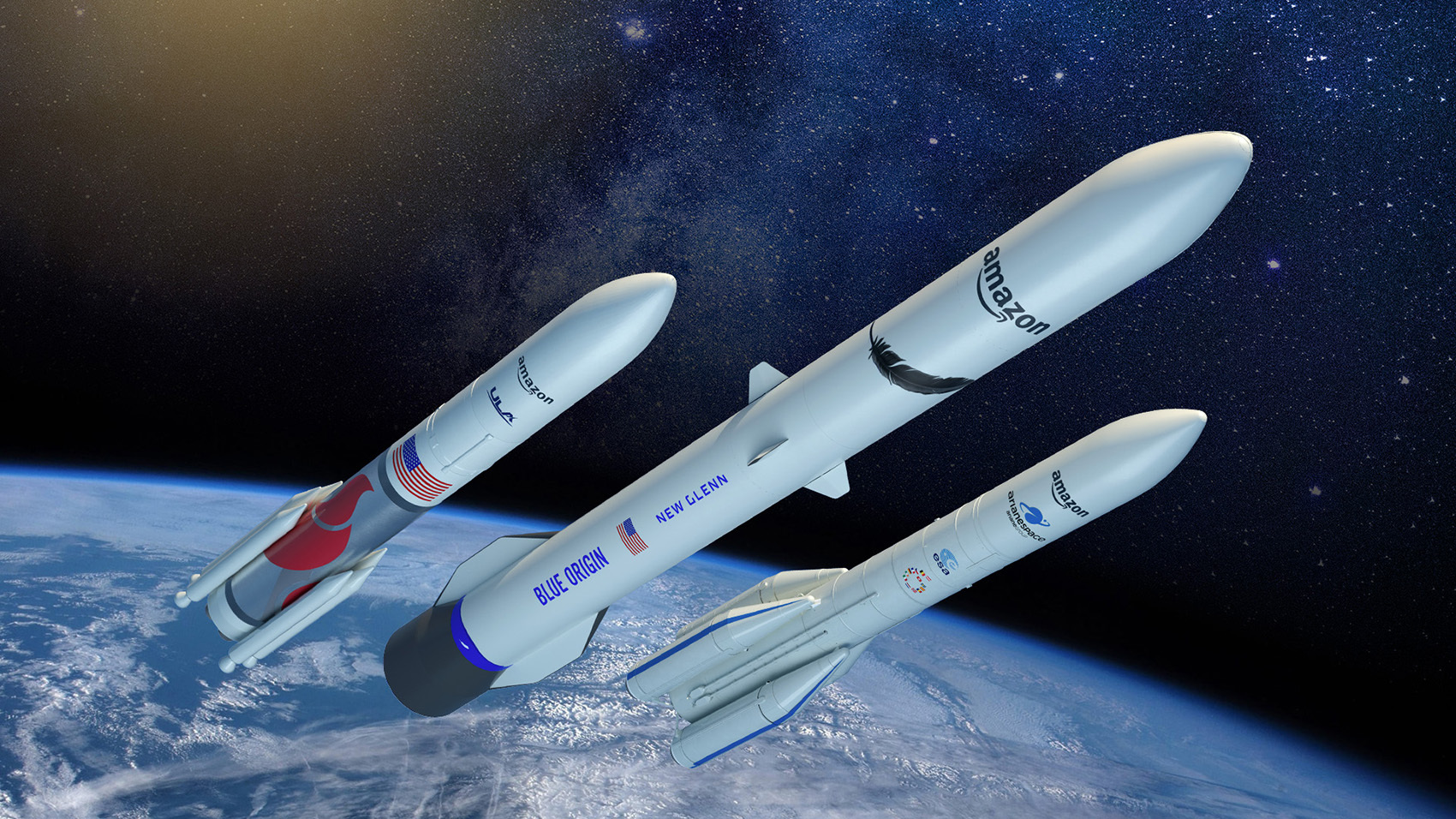
In a filing made public on Friday, Amazon cited a “shortage in the near-term availability” of rockets, alongside manufacturing disruptions and launch vehicle failures that have complicated its deployment schedule.
The company also pointed to limited spaceport capacity and extended development timelines for next-generation rockets as contributing factors that have delayed its ability to put satellites into orbit at the required pace.
Leo is “producing satellites considerably faster than others can launch them,” the company wrote.
Massive investment underpins Amazon’s internet-from-space ambitions
Amazon has committed at least $10 billion to build the satellite network, which has recently been rebranded as Amazon Leo as the project moves closer toward commercial viability.
Originally unveiled in 2019, the constellation is designed to deliver high-speed, low-latency internet access to consumers, businesses, and government users through compact square-shaped ground terminals.
Request for 24-month extension to meet regulatory milestone
Amazon is now seeking a 24-month extension that would push its regulatory deadline to July 2028, or alternatively requesting that the FCC waive the requirement to deploy about half of its 3,236 planned satellites.
The company stressed that its manufacturing pace is not the limiting factor, but rather the industry’s constrained launch capacity and delays among its rocket partners.
“Not withstanding this progress, the development timelines for these next-generation vehicles have extended beyond initial projections, contributing to Amazon Leo’s deployment delays,” the company wrote.
Launch partnerships expand as deployment accelerates
Amazon has booked more than 100 launches across multiple providers and recently secured 10 additional missions with SpaceX, along with a dozen more with Blue Origin, the space company founded by Jeff Bezos.
The company said several of its launch partners achieved significant milestones over the past year, but their revised schedules have still fallen short of what is needed for Leo’s original timeline.
Rapid growth pushes Amazon toward second-largest constellation
Since April, Amazon has placed more than 150 satellites into orbit and expects to reach approximately 700 satellites by the end of July, significantly expanding its presence in low Earth orbit.
This pace would move Amazon from the third-largest satellite constellation to the second-largest currently operating in space, marking a major milestone for the program’s early phase.
Its next mission is scheduled for February 12, when 32 additional satellites are set to launch aboard a rocket operated by Arianespace, further building out the network’s global coverage.
Competition intensifies with established satellite internet rivals
Amazon Leo enters a market already dominated by SpaceX’s Starlink, which operates more than 9,000 satellites and serves roughly 9 million customers worldwide with its broadband service.
Another competitor, OneWeb, operated by Eutelsat, maintains a constellation of more than 600 satellites aimed at enterprise and government connectivity across multiple regions.
Regulatory decision could determine pace of service rollout
Amazon warned that denying the requested extension would “undermine” the FCC’s broader goals of promoting rapid spectrum use and accelerating next-generation connectivity across underserved areas.
The company emphasized that similar extensions have been granted in the past and argued that strict enforcement could interrupt progress just as the network approaches initial commercial readiness.
“Amazon Leo is engaged in full-scale deployment and stands on the doorstep of offering U.S. customers a competitive and innovative new service,” the company said. “An extension would enable this rapid and ongoing deployment to continue, while strict enforcement would interrupt or halt this effort.”