


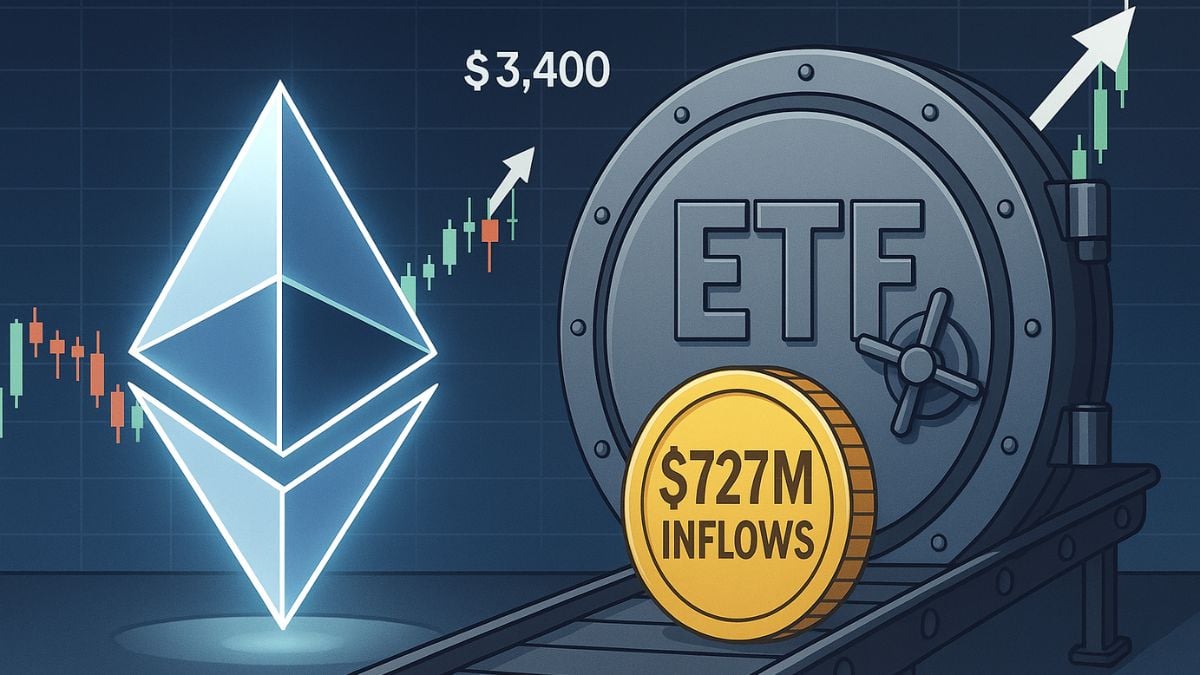
Ether briefly pushed above $3,400 midweek before pulling back sharply, with prices sliding around 4% over two days and settling near the $3,300 level.
The move caught bullish traders off guard and triggered roughly $65 million in liquidations across leveraged long ETH futures positions.


Despite reaching its highest price in two months, derivatives data suggests professional traders remain cautious, with sentiment leaning neutral to bearish rather than decisively optimistic.
Futures Markets Reflect Limited Confidence
Monthly Ether futures have been trading at an annualized premium of roughly 4% compared with spot prices.
In derivatives markets, a futures premium below 5% is generally interpreted as bearish, as sellers typically demand a higher return to compensate for longer settlement periods.
This subdued pricing structure indicates a lack of conviction among sophisticated investors, even as ETH attempted to reclaim higher levels.
Broader market conditions help explain the hesitation, as the overall cryptocurrency sector has trended lower while traditional assets such as gold and the S&P 500 reached fresh all-time highs in 2026.
Network Activity And Demand Concerns
Ether’s retreat toward $3,280 closely mirrors a broader decline in total cryptocurrency market capitalization, which has fallen by roughly 28% since early October 2025.
Reduced interest in decentralized applications has weighed on Ethereum’s price performance, particularly after enthusiasm around memecoin launches and speculative trading cooled.
New users and sustained activity are essential for driving transaction fees, network usage, and demand for ETH as a native token.
While Ethereum base layer transactions increased by about 28% over the past 30 days, average network fees declined by roughly 31% over the same period.
By comparison, rival blockchains such as Solana and BNB Chain recorded steadier transaction volumes, while their average fees climbed by around 20%.
More notably, Base, Ethereum’s largest scaling solution, saw transaction counts fall by approximately 26%, raising concerns about growth across the broader ecosystem.
Staking Dynamics And Institutional Flows
Lower network activity directly impacts Ethereum’s token economics, as the protocol burns ETH during periods of heavy usage.
When demand softens, fewer tokens are burned and staking rewards decline, reducing incentives for long-term holders.
Currently, close to 30% of the total ETH supply remains locked in staking, making returns sensitive to shifts in on-chain activity.
Institutional flows have also failed to provide a clear bullish catalyst.
Spot Ether exchange-traded funds in the United States have recorded modest net inflows of about $123 million since early January, suggesting interest but not strong conviction.
Meanwhile, publicly listed companies that accumulated ETH during previous rallies remain largely underwater on their holdings.
Corporate Holdings And Options Signals
Bitmine Immersion holds ETH reserves valued at approximately $13.7 billion, yet its market capitalization sits about 13% below that figure.
Sharplink faces a similar disconnect, with roughly $2.84 billion in ETH on its balance sheet compared with a market value closer to $2.05 billion.
These disparities highlight lingering skepticism among equity investors toward crypto-exposed companies.
Options markets reinforce this cautious tone.
Thirty-day ETH put options recently traded at a premium of around 6% over call options, a level typically associated with neutral-to-bearish expectations.
This pricing suggests professional traders see limited upside in the near term and are not positioning for a rapid move toward $4,100.
Overall, Ether’s price action appears increasingly dependent on external market forces rather than internal ecosystem growth.
Weak decentralized application demand, falling fees, and cautious institutional positioning continue to cap bullish momentum.